

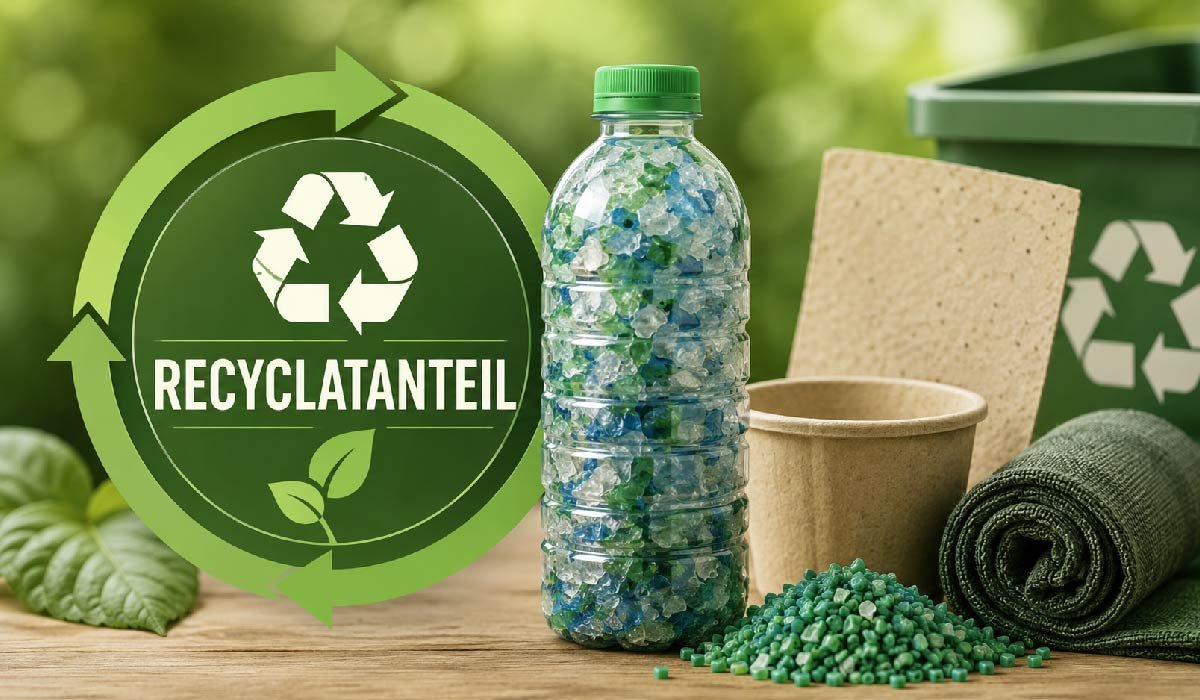
Recyclatanteil is the percentage of recycled material used in a product. It is a key concept in sustainability and the circular economy because it shows how much waste is actually reused, not just collected. In simple terms, recyclatanteil measures real recycling impact by tracking how much old material becomes part of new products.
Introduction
Recyclatanteil is becoming one of the most searched sustainability terms in 2026 because people are starting to question how effective recycling really is. For many years, people believed that putting waste into recycling bins was enough to protect the environment. However, the reality is more complex. A large amount of collected waste never returns to new products, which creates a major gap between effort and real results.
This growing awareness has made people more curious about what happens after recycling. Many consumers are now confused about the difference between recycling rate and actual reuse. At the same time, many brands promote their products as “eco-friendly” without showing real proof. This has increased skepticism and pushed people to look for measurable indicators like recyclatanteil.
Governments are also playing a big role in this trend. New laws are forcing companies to include recycled content in their products. This shift supports the circular economy, where materials are reused again and again instead of being wasted. In this article, you will learn what recyclatanteil means, why it matters, and how it is shaping the future of sustainability.
What Is Recyclatanteil?
Recyclatanteil is a simple but powerful idea. It means the percentage of recycled material used in a product. Instead of focusing only on collecting waste, it shows how much of that waste is actually reused. This makes it easier to understand whether a product truly supports sustainability.
For example, imagine a plastic bottle. If that bottle is made from 40% recycled plastic and 60% new plastic, then its recyclatanteil is 40%. This number gives a clear picture of how much old material has been reused in the product. It turns a general idea into something measurable and easy to compare.
This concept is more reliable than vague terms like “eco-friendly” or “green product.” Many companies use such labels without giving real data. Recyclatanteil removes confusion by providing a clear percentage. It helps consumers make better choices and encourages companies to be more transparent. In simple words, it shows real action instead of empty promises.
Recyclatanteil vs Recycling Rate
Many people think recyclatanteil and recycling rate mean the same thing, but they are very different. The recycling rate shows how much waste is collected and sent for recycling. It focuses on the collection process. On the other hand, recyclatanteil shows how much of that collected material is actually reused in new products.
This difference is very important. A country can have a high recycling rate, meaning it collects a lot of waste. But if companies do not use that waste in production, the recycling rate remains low. This means the recycling system is not fully effective. Waste is collected, but it does not complete the cycle.
For example, many plastic bottles are collected for recycling, but only a small percentage is turned into new bottles. The rest may be used for lower-quality products or even discarded. This gap shows why recyclatanteil is a better measure of real progress. It focuses on reuse, which is the final goal of recycling systems.
Why Recyclatanteil Is Important for Sustainability
Recyclatanteil plays a key role in building a sustainable future. One of its biggest benefits is reducing the need for new raw materials. When companies use recycled materials, they do not need to extract as many natural resources. This helps protect forests, water, and minerals.
Another important benefit is energy savings. Producing goods from recycled materials often uses less energy than making them from new resources. This leads to lower carbon emissions, which helps fight climate change. By increasing recyclatanteil, industries can significantly reduce their environmental impact.
Recyclatanteil also helps reduce waste. When materials are reused, they do not end up in landfills or oceans. This supports the circular economy, where resources are used again and again. Over time, this approach creates a more balanced and efficient system. It reduces pollution, saves energy, and protects the environment for future generations.
Types of Recycled Materials Used in Recyclatanteil
There are many types of materials that can be recycled and used to increase the recycling rate. Plastic is one of the most common. Recycled plastic is used in bottles, containers, and even clothing. It helps reduce the need for new plastic production.
Paper and cardboard are also widely recycled. Old newspapers and boxes are turned into new packaging materials. This process saves trees and reduces landfill waste. It is one of the simplest and most effective recycling methods.
Metals like aluminum and steel are highly valuable because they can be recycled many times without losing quality. For example, aluminum cans can be melted and reused again and again. Glass is another important material. Old glass bottles can be turned into new ones with less energy. Textiles made from recycled fibers are also growing in popularity, especially in the fashion industry. Each material plays a unique role in supporting sustainability.
PCR vs PIR – Understanding Recycled Material Sources
Recycled materials come from different sources, mainly PCR and PIR. PCR stands for post-consumer recycled material. This comes from products that people have used and thrown away, like plastic bottles or packaging. PCR has a strong environmental impact because it reduces waste in landfills.
PIR stands for post-industrial recycled material. This comes from waste created during manufacturing, such as leftover materials or production scraps. PIR helps reduce waste within factories and improves efficiency.
The main difference between PCR and PIR is their source and impact. PCR is more valuable for the environment because it deals with real waste. However, it is often harder to process due to contamination. PIR is cleaner and easier to use, but does not reduce consumer waste. Both types are important, but PCR is considered more beneficial for sustainability.
How Recyclatanteil Is Calculated (Step-by-Step)
Calculating the recyclate share is simple when you understand the formula. It is based on the weight of recycled material compared to the total weight of the product. The formula is: recycled material weight divided by total product weight, multiplied by 100.
For example, if a product weighs 100 grams and contains 30 grams of recycled material, the recyclatanteil is 30%. This percentage shows how much of the product is made from reused materials.
Accurate calculation is very important. Companies must track their materials carefully to ensure correct data. Without proper tracking, the percentage may not be reliable. Clear labeling also helps consumers understand the product’s value. This transparency builds trust and supports better decision-making.
Recyclatanteil in Real Life – Everyday Examples
Recyclatanteil is already part of many products we use every day. Plastic bottles are one of the most common examples. Many bottles are now made with a percentage of recycled plastic, which is often mentioned on the label.
Packaging is another area where recyclatanteil is widely used. Boxes, containers, and wrapping materials often include recycled content. This helps reduce waste and lower production costs. Clothing brands are also using recycled fibers to create new garments.
Electronics companies are starting to use recycled metals and materials in their products. However, it is important to note that sometimes only part of a product is made from recycled material. For example, a bottle may have recycled plastic, but its cap or label may not. Understanding these details helps consumers make better choices.
Industries Using Recyclatanteil
Many industries are now using recyclatanteil to improve sustainability. The packaging industry is leading the way by using recycled materials in containers and boxes. This reduces waste and supports eco-friendly production.
The construction industry uses recycled steel and concrete to lower costs and reduce environmental impact. The automotive industry also uses recycled metals and plastics in car manufacturing. This helps save resources and improve efficiency.
Fashion brands are using recycled textiles to create sustainable clothing. Electronics companies are reusing valuable materials from old devices. These industries are adopting recyclatanteil to meet customer demand and environmental goals. The trend is growing quickly across all sectors.
Government Rules and Global Regulations
Governments around the world are introducing rules to increase recyclatanteil. In the European Union, plastic bottles must contain at least 25% recycled material by 2025. This will increase to 30% by 2030.
These regulations are pushing companies to change their production methods. They must now include recycled content to meet legal requirements. Similar rules are being introduced in other regions as well.
In the future, these regulations are expected to become stricter. Governments want to reduce waste and protect the environment. This means recyclatanteil will become an important standard in many industries.
Benefits of High Recyclatanteil for Businesses
High recyclatanteil offers many benefits for businesses. One major advantage is cost savings. Using recycled materials can reduce production costs over time. It also lowers waste management expenses.
Another benefit is improved brand image. Customers prefer companies that care about the environment. Businesses that use recycled content can attract more eco-conscious consumers. This builds trust and loyalty.
Recyclatanteil also gives companies a competitive advantage. As demand for sustainable products grows, businesses that adapt early can stand out in the market. It is both an environmental and economic opportunity.
Challenges in Increasing Recyclatanteil
Despite its benefits, increasing recyclatanteil is not easy. One major challenge is material quality. Recycled materials may not always meet the same standards as new materials. This can affect product performance.
Cost is another issue. High-quality recycled materials can sometimes be more expensive than new ones. Supply is also limited, which makes it harder for companies to use them at scale.
There are also strict regulations and safety standards, especially for food packaging. Some materials cannot be recycled many times. These challenges slow down progress and require better solutions.
Solutions to Improve Recyclatanteil
There are several ways to improve recyclatanteil. One solution is better product design. Companies can create products that are easier to recycle and reuse. This improves efficiency in the recycling process.
Advanced technology also plays a big role. Modern machines can sort and process materials more accurately. This increases the quality of recycled materials. Industry collaboration is also important. Companies can work together to share resources and knowledge.
Investment in research is another key solution. New methods can improve recycling processes and expand the use of recycled materials. These solutions help overcome challenges and support growth.
How to Identify Real Recyclatanteil Claims
Consumers need to be careful when choosing products. Many companies use vague terms like “eco-friendly” without proof. To identify real recyclatanteil claims, look for clear percentage numbers.
Check for certifications that verify the claim. These show that the information is accurate. Also, understand the source of the material. PCR is usually more valuable than PIR.
Avoid products with unclear or misleading labels. By being informed, consumers can avoid greenwashing and support genuine sustainability efforts.
Role of Consumers in Increasing Recyclatanteil
Consumers play a very important role in increasing recyclatanteil. Buying products with recycled content encourages companies to use more recycled materials. This creates demand for sustainable products.
Proper waste sorting is also important. Clean and separated waste is easier to recycle. This improves the quality of recycled materials and increases reuse.
Small actions can make a big difference. When many people make better choices, the impact becomes significant. Consumers are a key part of the solution.
Future of Recyclatanteil in 2026 and Beyond
The future of recyclatanteil looks very promising. New technologies like AI are improving waste sorting and recycling efficiency. Digital tracking systems will make it easier to monitor material usage.
Governments will continue to introduce stricter rules. This will push companies to increase recycled content. The circular economy will become more common.
In the future, recyclatanteil will likely become a standard part of production. It will no longer be optional. This will lead to a more sustainable and efficient system.
Conclusion
Recyclatanteil is changing how we think about recycling. It focuses on real reuse instead of just collection. This makes it a more effective way to measure sustainability.
By understanding recyclatanteil, both consumers and businesses can make better decisions. It helps reduce waste, save resources, and protect the environment.
The future depends on real action, not just good intentions. Choosing products with higher recyclatanteil is a simple but powerful step toward a better world.
(FAQs)
Read Also: Mabinogi Lazy Patch Guide: Powerful Way to Fix Slow Updates Fast