

Introduction
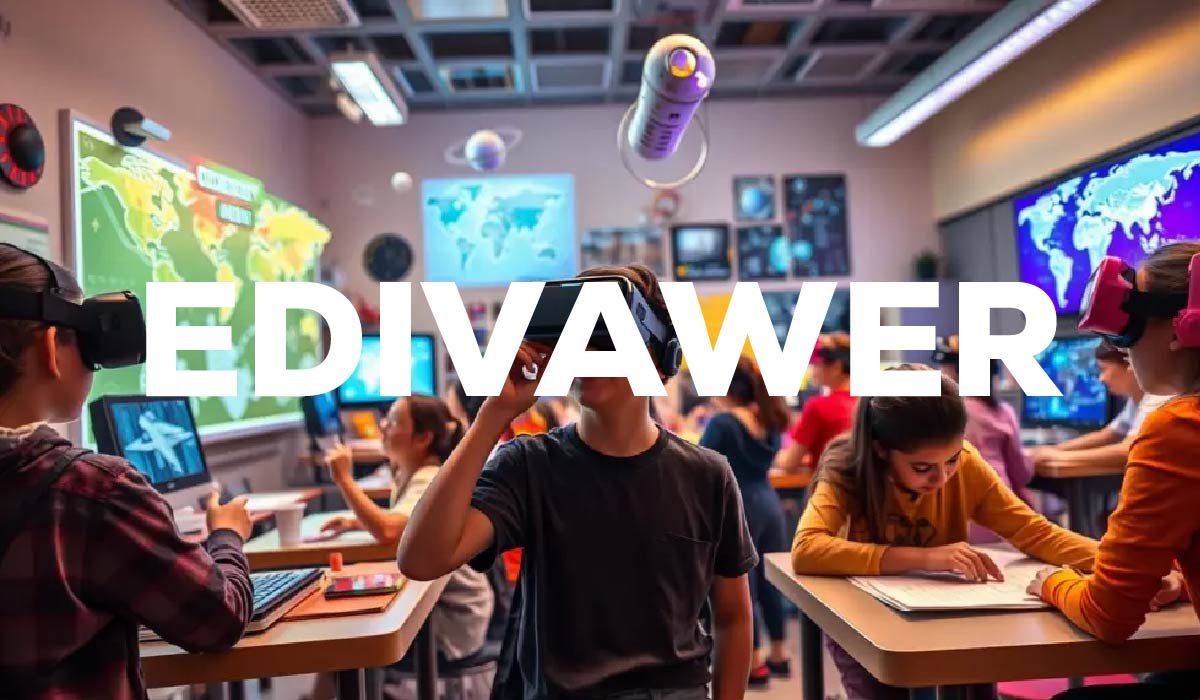
Imagine a high school student putting on a lightweight headset and suddenly standing inside a living human cell. She watches mitochondria pulse with energy, sees proteins move along pathways, and walks around structures that were once only flat diagrams in a textbook. Instead of memorizing labels, she experiences biology in three dimensions. This type of immersive learning is powerful because it turns abstract ideas into real experiences. Unfortunately, most digital learning today looks very different. Students sit in front of screens, click through slides, watch recorded lectures, and answer quizzes. Within a few modules, many begin to lose focus. This sharp drop in attention is often called the “student engagement cliff.”
The numbers show the problem clearly. Many online courses report completion rates between 20 and 30 percent. In corporate training, research suggests that up to 70 percent of newly learned information can be forgotten within a month if it is not reinforced properly.
Flexibility alone is not enough to keep learners motivated. Isolation, passive content, and one-size-fits-all modules often lead to low retention and weak outcomes. This is where Edivawer enters the picture as a next-generation solution.
By combining immersive technology, artificial intelligence, and real-time collaboration, it aims to transform how people learn and train. In this article, we will explore what Edivawer is, how it works, why traditional platforms fall short, how it improves retention and ROI, and what its future means for education and workforce development.
What Is Edivawer?
Edivawer is an Education 4.0 platform designed to modernize learning through advanced digital technology. It combines artificial intelligence, virtual reality classrooms, and augmented reality learning into a single immersive system. Instead of limiting learners to screens and static content, it allows them to step into interactive three-dimensional environments. This approach moves beyond simple online courses and creates what can be described as immersive learning infrastructure.
At the center of Edivawer is a concept called Flexible Reality. This system blends full virtual reality experiences with augmented reality overlays that can enhance the physical world. Learners can switch between completely virtual classrooms and real-world environments enhanced with digital layers. The platform also includes a collaborative intelligence engine that connects learners in real time. Students, teachers, and trainers can interact naturally, communicate in shared virtual spaces, and work together on practical challenges.
Edivawer is built for a wide audience. K-12 schools can use it to increase student engagement and improve classroom participation. Higher education institutions can create immersive labs and research simulations. Corporate learning and development teams can deliver hands-on training without physical risk. Enterprise leaders focused on digital transformation can use it to modernize skills training at scale. Rather than being just another learning app, Edivawer functions as a complete immersive learning ecosystem that supports personalization, collaboration, analytics, and long-term innovation.
The Student Engagement Cliff: Why Traditional Digital Learning Fails
The student engagement cliff describes the moment when learners begin to lose interest in digital courses. It often happens after the first few lessons, once the novelty wears off and the format becomes repetitive. Traditional learning management systems rely heavily on recorded videos, slide presentations, downloadable PDFs, and multiple-choice quizzes. While these tools offer convenience, they rarely create emotional or physical involvement. Learning becomes passive instead of active.
Static LMS platforms struggle because they cannot recreate human interaction or real-world presence. When learners sit alone in front of a screen, collaboration is limited to chat boxes or forums. There is little movement, little exploration, and minimal real-time feedback. Over time, this leads to reduced motivation and weak memory retention. In corporate settings, this inefficiency translates into lost productivity and wasted budgets. Employees complete compliance modules but forget key information within weeks.
Key Reasons Traditional Platforms Fail
- No immersion
- No personalization
- No real-time feedback
- No embodied learning
- Limited collaboration
Without immersive elements, learners cannot fully engage their senses. Without personalization, they move at a fixed pace that may not match their needs. Without real-time feedback, confusion remains unresolved. Without embodied learning, concepts remain abstract. And without meaningful collaboration, motivation declines. These limitations explain why many organizations are now searching for more advanced and interactive solutions.
How Flexible Reality Transforms Learning Experiences
Flexible Reality is the core innovation behind Edivawer. It integrates virtual reality and augmented reality into a seamless learning environment. In full virtual mode, learners enter a completely digital world where they can move, interact, and collaborate with others. In augmented mode, digital elements are layered onto the real environment, enhancing physical classrooms or workplaces with interactive information. This flexibility allows educators and trainers to choose the level of immersion that fits their goals.
The platform is built on spatial learning architecture. Instead of presenting information in linear slides, it organizes knowledge in three-dimensional space. Learners explore environments, manipulate objects, and solve problems in context. Multi-modal learning happens naturally. Visual cues, spatial audio, and physical gestures combine to strengthen understanding. With the use of controllers and haptic feedback, learners can feel actions, which supports embodied cognition. This means the brain connects physical movement with memory formation.
Real-world applications demonstrate the impact. A biology student can explore a human cell from the inside. A history class can walk through ancient Rome. Factory workers can practice safety procedures in a simulated production line. Medical trainees can rehearse complex procedures without risk. Immersion increases memory encoding because experiences are tied to space, motion, and emotion. Instead of memorizing facts, learners build mental maps that last longer and transfer better to real-life situations.
AI-Driven Personalization: Learning Paths That Adapt in Real Time
Artificial intelligence powers the personalization engine within Edivawer. The system continuously analyzes learner behavior, including pace, performance, and interaction patterns. Based on this data, it adapts content in real time. If a learner struggles with a concept, the platform slows down, offers additional simulations, and provides supportive explanations. If a learner masters material quickly, the system introduces advanced scenarios to maintain engagement.
Adaptive pacing ensures that each learner moves forward at a comfortable speed. Dynamic content adjustment allows lessons to change based on progress. Scenario-based learning progression means learners unlock more complex challenges as they demonstrate competence. Intelligent remediation identifies weak areas and provides targeted practice. Advanced learners receive enrichment tasks that deepen their knowledge.
The collaborative intelligence engine enhances personalization further by matching learners with peers who complement their strengths. In enterprise settings, this creates balanced teams for problem-solving exercises. Managers can scale personalized coaching across large organizations without adding more staff.
What Makes Edivawer Different From Basic Adaptive LMS
Real-time simulation adjustment
Behavioral analysis
Collaborative intelligence
Predictive engagement modeling
Unlike basic adaptive quizzes, Edivawer adjusts entire immersive environments based on behavior. It predicts engagement levels and intervenes early, helping learners stay motivated and confident throughout their journey.
Biometric Engagement Assessment: Measuring Attention Ethically
Edivawer includes a biometric engagement assessment to understand how learners interact with content. Using headset sensors, the system can monitor indicators such as heart rate variability, eye tracking, and subtle movement patterns. These signals help map attention levels in real time. Instead of waiting for test results, educators receive immediate insight into engagement.
The platform uses a privacy-first dashboard model. Data is aggregated and anonymized to protect individual identity. Teachers and trainers see trends and patterns rather than intrusive personal details. End-to-end encryption safeguards sensitive information, and compliance with global data standards ensures responsible handling.
Biometric insights often provide a clearer picture than quiz scores alone. A learner might answer correctly but remain disengaged. By measuring attention and emotional response, instructors can adjust lessons before performance declines. This proactive approach helps close learning gaps early and supports long-term success while maintaining ethical standards and data security.
Proven Results: The 340 Percent Retention Boost Explained
Organizations that have adopted immersive learning models report strong improvements in retention. In one manufacturing safety program, switching from traditional e-learning modules to immersive simulations led to a reported 340 percent increase in knowledge retention. Employees practiced procedures in realistic environments, which strengthened memory and confidence. In K-12 pilot programs, students reported feeling more connected to lessons and classmates, and assessment scores improved.
Cognitive science helps explain these results. Spatial memory encoding allows the brain to store information linked to physical environments. Experiential learning theory shows that people learn better by doing rather than only reading or listening. Emotional engagement also enhances memory because meaningful experiences are remembered more easily. Compared to typical 30-day retention rates in traditional training, immersive approaches create stronger recall and better skill application. For enterprises, this translates into measurable ROI, fewer errors, and more efficient onboarding.
Edivawer vs Traditional Online Learning Platforms
Traditional online learning platforms focus on delivering content efficiently, but they often lack depth in engagement. Engagement levels typically decline after initial modules because interaction is limited. Retention rates remain low, and collaboration is often restricted to discussion boards. Personalization may exist in basic quiz adjustments, but it rarely changes the structure of learning itself.
Edivawer offers sustained engagement through interactive three-dimensional environments. Retention improves because learners experience rather than simply observe. Collaboration happens in shared virtual spaces where participants can speak, gesture, and work together naturally. Personalization extends beyond quizzes into full adaptive simulations. Analytics tools provide real-time behavioral insights instead of only test results. Over time, this can improve cost efficiency because higher retention reduces the need for repeated training. Accessibility is also flexible, with options for different devices and levels of immersion. These advantages explain why immersive platforms are gradually replacing static LMS systems.
Benefits of Edivawer for Corporate Training
In corporate environments, effective training directly impacts productivity and safety. Edivawer accelerates onboarding by allowing new employees to practice tasks in realistic simulations before entering real workplaces. Risk-free environments reduce accidents and improve compliance training outcomes. Employees retain information longer because they actively engage with procedures rather than only reading guidelines.
Sales teams can rehearse pitches in lifelike boardrooms and receive immediate feedback. Engineers can practice equipment repair without damaging real machines. Safety drills can be repeated until performance meets standards. Leadership training scenarios can simulate challenging conversations and decision-making situations. Real-time performance feedback helps employees refine skills quickly. Personalized coaching can scale across large organizations without requiring constant instructor supervision. Over time, companies benefit from reduced retraining costs and measurable improvements in efficiency and confidence.
Benefits of Edivawer for K-12 and Higher Education
In educational institutions, engagement is closely linked to academic success. Edivawer increases classroom participation by transforming lessons into interactive experiences. Students are more likely to stay focused when they can explore content rather than passively watch it. Behavioral disruptions often decrease when learners are actively involved.
The platform supports inclusive design for special needs learners by allowing customizable sensory settings. Teachers can adjust environments to reduce distractions or enhance clarity. Improved engagement can contribute to better standardized test outcomes because concepts are understood deeply rather than memorized temporarily. Teachers regain valuable time that would otherwise be spent re-explaining material. Collaboration in virtual spaces encourages peer learning and communication skills. Over time, stronger engagement and support can help reduce dropout rates and improve overall academic achievement.
Challenges of Immersive Learning and How Edivawer Solves Them
Immersive learning is not without challenges. Some users may feel concerned about a learning curve when adopting new technology. Hardware costs can also be a factor for institutions with limited budgets. Teachers and trainers may resist change if they feel unprepared. Data privacy concerns must be addressed clearly. Technical glitches and infrastructure requirements can also present obstacles.
Practical Solutions
- Pilot programs
- Champion training groups
- Gradual LMS integration
- Transparent data policies
- Ongoing software updates
- Scalable device options
Starting with small pilot programs allows organizations to test effectiveness before full rollout. Training internal champions builds confidence and peer support. Gradual integration with existing systems reduces disruption. Clear communication about privacy builds trust. Continuous updates improve stability. Scalable device options make adoption more accessible across different budgets.
Step-by-Step Implementation Guide for Schools and Enterprises
Successful implementation begins with a focused pilot program in one department or grade level. Clear success metrics should be defined early, such as retention improvement, engagement scores, or reduced onboarding time. Training internal champions ensures that staff feel supported during transition. Integrating APIs with existing LMS platforms maintains continuity and prevents workflow disruption.
Transparent communication about data privacy reassures stakeholders. Measuring retention and engagement regularly provides evidence of progress. Scaling department by department allows gradual adoption without overwhelming teams. Quarterly ROI evaluations help leaders assess long-term value. With a structured approach, immersive learning can become a stable part of institutional strategy rather than a temporary experiment.
How Edivawer Compares to Other Digital Innovation Platforms
Many digital innovation tools focus on single functions. Traditional LMS tools prioritize content management. Video-based platforms emphasize streaming lectures. Basic adaptive software adjusts quiz difficulty. Standalone VR tools provide immersive experiences but often lack integration with analytics and AI.
Edivawer stands out because it combines AI, VR, AR, and biometric analytics in one ecosystem. Integration matters because fragmented tools create complexity and limit scalability. By uniting personalization, immersion, and measurement, the platform offers a comprehensive solution. Flexible Reality ensures adaptability for different contexts, making it future-ready as technology continues to evolve.
The Future of Education 4.0 and Immersive Workforce Learning
The future of learning is moving toward immersive classrooms and spatial computing. As digital transformation accelerates, organizations need systems that prepare learners for complex environments. AI-driven curriculum design will continue to personalize education. Remote collaboration in three-dimensional spaces will become more common. Data-driven ecosystems will help institutions refine teaching methods continuously.
Edivawer represents infrastructure for this evolving landscape. Rather than following trends, it aligns with long-term shifts in how people interact with technology. As industries demand adaptable skills and a deeper understanding, immersive learning platforms are likely to play a central role in education and workforce development.
Conclusion
Digital learning has struggled with declining engagement and low retention for years. The engagement cliff continues to limit outcomes in both education and corporate training. Edivawer addresses these challenges by combining immersive environments, AI-driven personalization, and ethical biometric insights. This integrated approach supports deeper understanding, stronger collaboration, and measurable ROI.
By transforming passive content into active experiences, the platform aligns with how people naturally learn. Schools can improve engagement and inclusivity, while enterprises can increase efficiency and reduce retraining costs. Organizations that explore pilot programs today position themselves as leaders in innovation tomorrow. As technology continues to evolve, immersive and adaptive learning systems are likely to define the next era of education and workforce development.
For More: Globe Way Magazine